Do you find yourself pondering on how to select the ideal cat carrier for your feline companion? Finding the perfect carrier that ensures the comfort and safety of your cat may seem like a daunting task at first. However, fear not! This article will be your guide, shedding light on the essential factors to consider when choosing a cat carrier, making your decision-making process much smoother and more enjoyable. So, let’s embark on this journey together and discover the best cat carrier for your furry friend! Choosing the right cat carrier is an important decision to ensure your furry friend’s comfort and safety during travel. With so many options available, it can be overwhelming to know where to start. But fear not, we’re here to guide you through the process in a friendly and helpful manner. Let’s dive into the key factors to consider when choosing the perfect cat carrier.
Size
First and foremost, consider the size of your cat. It’s essential to choose a carrier that provides enough space for them to move around comfortably. Cats should be able to stand up and turn around without any restrictions. This not only helps prevent discomfort but also allows them to maintain their natural posture. So, measure your cat’s height and length to ensure you select a carrier that provides ample room.
Once you have your cat’s measurements, the next step is to check the dimensions of the carrier. Compare the carrier’s size with your cat’s measurements to ensure a good fit. Remember, bigger is not always better. A carrier that is too large may increase the risk of your cat sliding around during travel, which can cause anxiety and stress.
Type
Another crucial aspect to consider when choosing a cat carrier is the type: soft or hard. Both types have their advantages and disadvantages, so let’s evaluate them to help you make an informed decision.
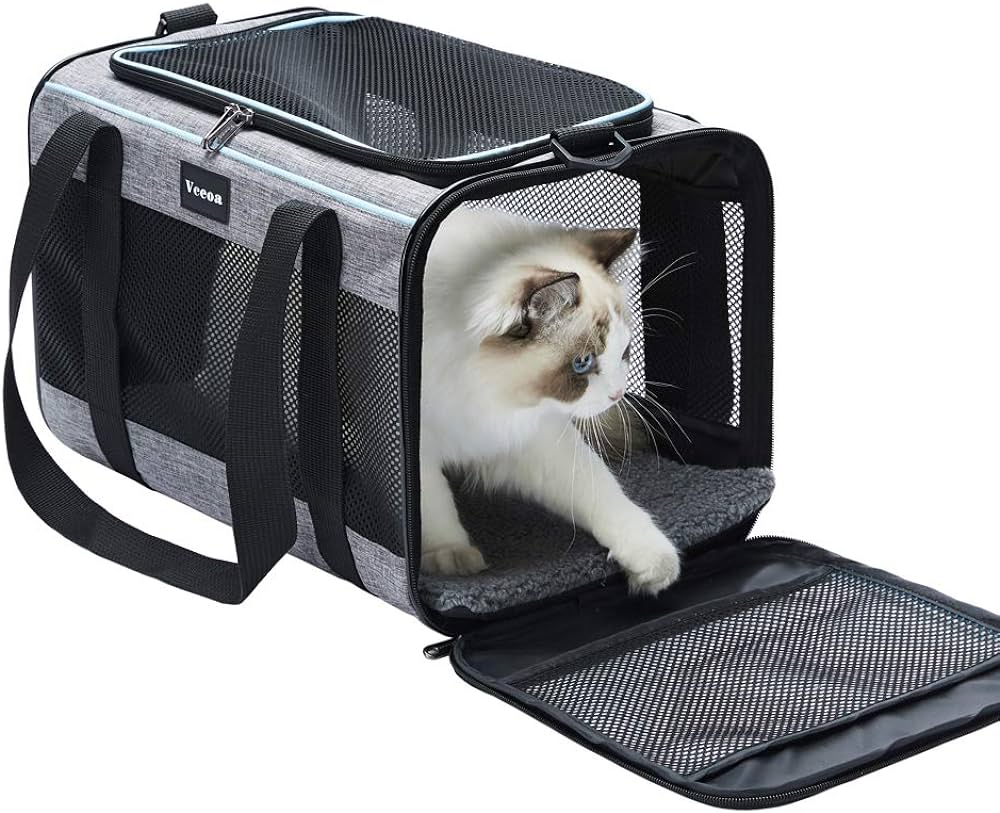
Soft carriers are lightweight, easy to store, and often have mesh panels for excellent visibility and ventilation. They usually feature a shoulder strap or handles for convenience. However, soft carriers may not provide as much protection in case of a collision or impact. If your cat is calm and not prone to scratching or chewing, a soft carrier can be a great option for short trips and visits to the vet.
On the other hand, hard carriers are more sturdy and offer better protection. They provide a solid and secure environment for your cat and are particularly suitable for air travel. Hard carriers often have a top-loading feature, allowing for easy access to your cat. However, they tend to be heavier and take up more space compared to soft carriers. Consider your cat’s needs and your transportation requirements to make the best decision.
Material
When it comes to material, opt for a carrier made of sturdy and durable material. A carrier that can withstand scratching and wear and tear will ensure it lasts for a long time. Look for carriers with reinforced seams and sturdy construction. Additionally, consider the ease of cleaning and maintaining the carrier. Accidents happen, and you’ll want a carrier that can be easily wiped down or even machine washed if needed.
Safety Features
The safety of your cat is paramount, so it’s essential to choose a carrier with proper safety features. Look for carriers with secure latches or locks to prevent accidental openings. It’s also crucial to ensure proper ventilation for your cat’s comfort. Look for carriers with mesh panels or air vents to allow for adequate airflow. Good ventilation is particularly important for longer trips or flights.

Accessibility
When selecting a cat carrier, consider its accessibility features. Check if the carrier has multiple entrances, as it can be helpful in situations where you need to quickly access your cat or if you have a skittish cat that prefers an alternative exit. Evaluate the ease of opening the carrier, as it will impact how smoothly you can place your cat inside or take them out. Look for carriers with sturdy zippers or secure latches that are easy to operate.
Comfort
The comfort of your cat should be a top priority when choosing a carrier. Look for carriers with padding or cushioning inside. This provides a soft and cozy environment for your cat, helping to alleviate stress and anxiety during travel. Consider if the carrier has room for a small blanket or toy that your cat loves. Having familiar scents and objects can help ease their nerves and provide a sense of security. Additionally, assess the carrier’s noise and vibration levels. A carrier with noise-reducing features or a smooth ride can make a significant difference in your cat’s comfort level.
Portability
Portability is another factor to consider, especially if you plan on traveling frequently with your cat. Consider the weight and size of the carrier for ease of transport. A lightweight carrier will make it more manageable to carry your cat and any additional luggage. Look for carriers with handles or even shoulder straps for added convenience. Carriers with collapsible features or ones that can fit snugly under airplane seats are also worth considering if you frequently fly with your cat.
Quality
To ensure a high-quality carrier, it’s always a good idea to read reviews or ask for recommendations from other cat owners. Their experiences can provide valuable insights into the durability and functionality of different carriers. Additionally, consider the warranty or return policy of the carrier. A reputable brand will stand behind their product and offer guarantees, giving you peace of mind in case of any issues.
Price
Setting a budget for your cat carrier is important, but remember that quality should be a priority over price. That being said, there are carriers available for various budgets. Compare prices and features of different carriers to find the best value for your money. Don’t forget to take into account factors such as durability, safety features, and comfort. Investing a bit more in a carrier that meets all your requirements will go a long way in ensuring your cat’s well-being during travel.
Durability
Lastly, make sure the carrier is made of durable material that can withstand any adventures or rough handling. Check if the carrier has reinforced seams, sturdy zippers, or a robust overall construction. A carrier that holds up well over time will not only save you money in the long run but also provide a reliable and secure space for your cat.
By considering the size, type, material, safety features, accessibility, comfort, portability, quality, price, and durability, you’ll be well equipped to choose the perfect cat carrier for your furry companion. Remember, a carrier that provides comfort, safety, and ease of use will make every journey a pleasant experience for both you and your cat. Bon voyage!